
As of January 1, 2026, Ontario constructors on many projects have a new legal requirement under Ontario Regulation 213/91 (Construction Projects) to ensure an Automated External Defibrillator (AED) is available on site—along with specific rules for placement, signage, maintenance, inspections, records, and having trained workers present. These duties were added to O. Reg. 213/91 through O. Reg. 157/25, which introduces section 27.1 on defibrillators.
Construction is fast-paced, physically demanding, and often remote from immediate medical support. In a sudden cardiac arrest, every minute counts—and an AED on site can be the difference between life and death. This update is about more than compliance: it’s about readiness, response, and protecting your people.
Below is a practical breakdown of what Ontario constructors and employers need to know, written for real-world jobsite use.
What changed in Ontario Regulation 213/91?
O. Reg. 213/91 now includes section 27.1, which sets out the AED requirements for certain construction projects. The regulation came into force January 1, 2026.
Does your project need an AED?
An AED is required on a project when both of the following apply:
- 20 or more workers are regularly employed at the project; and
- The project/work is expected to last three months or more.
Exemption: Projects expected to last less than three months are not subject to the AED requirement in section 27.1.
Practical note: “Regularly employed” is not the same as “occasionally present.” If your manpower ramps up and stays at/above 20 for ongoing operations, you should treat this as applicable and plan accordingly.
Ontario construction AED requirements
Here are the key AED requirements in point form, aligned to section 27.1 as summarized in plain language by credible Ontario-based legal and safety sources:
1) The constructor’s core duty
- The constructor must ensure an AED is installed and maintained at the project when the trigger conditions are met.
2) The AED must be Health Canada–licensed
- The AED must be licensed as a medical device by Health Canada (i.e., a compliant, approved unit—not an unlicensed/imported device).
3) Required accessories must be stored with the AED (the “AED kit”)
You must store the following items with the AED and keep them usable/replenished:
- 1 CPR mask
- 1 pair of scissors
- 2 pairs of disposable medical-grade gloves
- 1 disposable razor
- 1 garbage bag
- 4 absorbent towels
4) Storage and placement rules (accessibility + protection)
The AED and required items must be stored in a suitable place that:
- Keeps the AED and accessories together as a kit
- Protects equipment from dust and moisture (and site contaminants)
- Is unobstructed and easily accessible
- If outdoors, protects from extreme temperatures, moisture, and direct sunlight
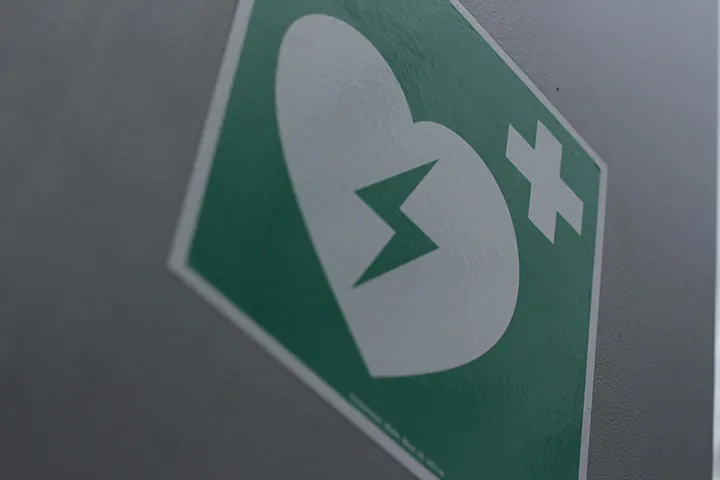
5) Signage is mandatory (AED must be easy to find)
You must have:
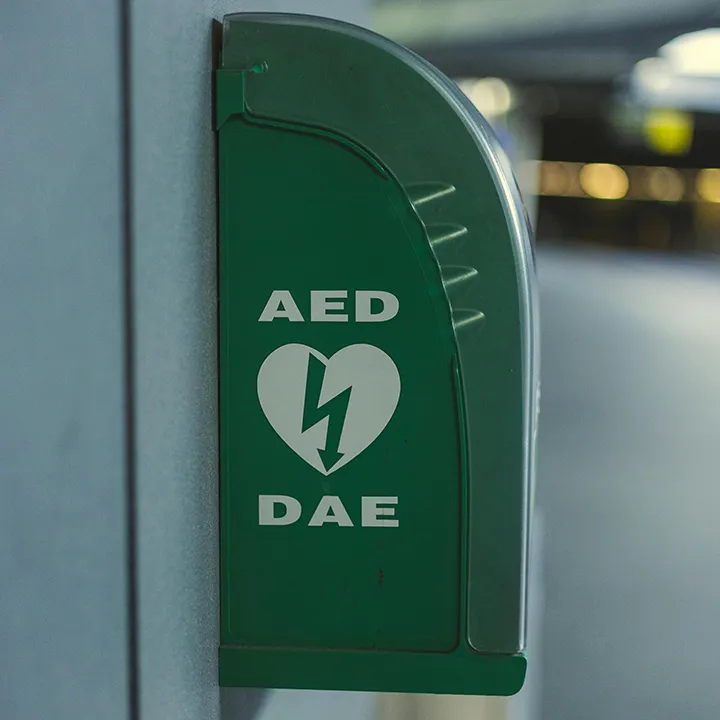
- Signs adjacent to the AED, and
- Additional signs throughout the project indicating the AED’s location.
Each AED sign must include:
- A graphic symbol depicting a heart with a lightning bolt, and
- Text in English or French:
- English: “Automated External Defibrillator” or “AED”
- French: “Défibrillateur Externe Automatisé” or “DEA”
6) Maintenance, testing, quarterly inspections, and records
The AED must be:
- Maintained and tested according to the manufacturer’s instructions
- Inspected quarterly by a competent worker (following manufacturer instructions)
Recordkeeping:
- A record of inspections must be kept with the AED
- The inspection record must include, at minimum:
- Date of inspection
- Name and signature of the competent worker who performed it
7) Trained worker must be present whenever work is in progress
- At all times when work is in progress, at least one worker trained in CPR and defibrillator operation must be present on site.
This is one of the most operationally important requirements—because it directly affects staffing, supervision coverage, and scheduling.
What this means in the real world
Even good companies can miss details when a new rule lands mid-season. Here are the most common problem areas we’re expecting to see on Ontario sites in 2026:
“We bought an AED — we’re done.”
Not quite. The regulation is about more than purchasing a device. It also requires:
- The specific accessory kit
- Proper storage (including environmental protection)
- Signage (adjacent + throughout the project)
- Quarterly inspections by a competent worker
- Records kept with the AED
- A trained CPR/AED worker present at all times when work is underway
“It’s in the trailer somewhere.”
Accessibility matters. If it’s blocked, buried, locked away, or not clearly marked, it’s not meeting the spirit—or the requirements—of the law.
“We have first aid trained people… I think.”
Section 27.1 expects CPR + defibrillator operation training coverage whenever work is in progress—not “sometimes” or “most shifts.”
Step-by-step: How to implement AED compliance on your construction projects
If you’re responsible for health and safety, supervision, or project delivery, here’s a practical rollout plan.
Step 1: Confirm if your project meets the trigger
- Are 20+ workers regularly employed?
- Is the project expected to run 3+ months?
If yes to both: you need an AED program for that site.
Step 2: Select a Health Canada–licensed AED
- Confirm the AED is Health Canada–licensed as a medical device.
Step 3: Build the required AED kit
Stock and stage the required accessories:
- CPR mask, scissors, 2 pairs medical-grade gloves, razor, garbage bag, 4 absorbent towels.
Step 4: Decide the storage location (and make it jobsite-proof)
Pick a location that is:
- Central and quick to access
- Protected from dust/moisture
- Protected from environmental extremes if outdoors
- Not obstructed (think: emergency access at all times)
Step 5: Install signage
- Place signage at the AED
- Place directional signage around the project so workers can find it fast
- Use the required symbol and text (“AED” or “Automated External Defibrillator,” or French equivalents)
Step 6: Create an inspection + maintenance system
- Follow the manufacturer’s testing/maintenance instructions
- Schedule quarterly inspections by a competent worker
- Keep inspection records with the AED, including dates and signatures
Step 7: Ensure trained coverage at all times work is in progress
- Identify your CPR/AED trained workers
- Plan schedules so a trained worker is always present
- Keep training documentation in your safety records
WSIB AED Rebate Program (Important Cost Offset for Constructors)
Before finalizing your AED program, it’s important to note that the Workplace Safety and Insurance Board (WSIB) offers an AED rebate program that may help offset the cost of purchasing an AED for eligible Ontario workplaces, including construction projects.
The WSIB AED program provides financial support to encourage the installation of AEDs in workplaces and outlines eligibility criteria, reimbursement amounts, and documentation requirements.
👉 Learn more about the WSIB AED rebate program here:
https://www.wsib.ca/en/AED
Important reminder:
Participation in the rebate program does not replace your legal duty to comply with Ontario Regulation 213/91. Even if you choose not to apply for the rebate, the AED requirements under section 27.1 must still be met where applicable.
How Safety Training and Consulting Services Ltd. (STC) Can Help
The introduction of AED requirements under Ontario Regulation 213/91 is a positive step forward—but like many regulatory changes, compliance is not just about purchasing equipment. It’s about implementation, consistency, and readiness.
At Safety Training and Consulting Services Ltd. (STC), we help Ontario constructors move beyond checkbox compliance and build practical, inspection-ready AED programs that work on real construction sites.
STC can support your organization by:
- Assessing whether your projects meet the AED trigger requirements
- Assisting with AED program setup, including storage, signage placement, and environmental considerations
- Providing jobsite-ready inspection and maintenance templates, including quarterly inspection logs aligned with regulatory requirements
- Helping ensure trained CPR/AED coverage is in place during all active work periods
- Integrating AED requirements into your site-specific safety plans, emergency response procedures, and supervisor responsibilities
- Supporting compliance reviews as part of broader COR2020, OHSA, and due diligence initiatives
Most importantly, we translate legislation into clear, usable systems that supervisors and workers understand—so when an emergency happens, your team is prepared to act confidently and quickly.
If you would like support implementing the new AED requirements on your construction projects, or would like help reviewing your current emergency response readiness, STC is here to help.
Because compliance is important—but preparedness saves lives.