
Joint Health and Safety Committee Certification Part One
In Person, distance learning

Overview
Under section 9 of the Occupational Health and Safety Act (OHSA), where a workplace has twenty (20) or more workers, a Joint Health and Safety Committee must be established. All Joint Health and Safety Committees are required to have two of their members, one worker and one manager, certified by a Chief Prevention Officer (CPO) approved training provider.
To become a fully certified JHSC member, you must initially complete two CPO approved Joint Health and Safety Committee programs; Part One and Part Two, which is workplace specific.
- Joint Health and Safety Committee Part One training will be three days in length (19.5 hours)
- Joint Health and Safety Committee Part Two training will be two days in length (13 hours)
Joint Health and Safety Committee Part One training is geared towards ensuring that you understand the legal roles and responsibilities of many workplace parties, understand how to read and look up legislation, and to review what you need to know about workplace hazards, inspections, and investigations.
Once you have completed the JHSC Part One training, you must complete your JHSC Part Two training within 12 months in order to become a fully certified member.
Joint Health and Safety Committee Certification is valid for three years. Prior to the expiry of your Joint Health and Safety Committee certification, you must complete a Joint Health and Safety Committee Refresher training session with a CPO Approved provider, which will then revalidate your certification for an additional three years. This refresher training is one day (minimum 6.5 hours) in length.
What You’ll Learn
- Describe the certification process and explain the role of the certified member.
- Describe the importance of occupational health and safety and outline the roles of each of the workplace parties.
- Identify occupational health and safety legislation, demonstrate how to access information from it, and explain the basic rights, responsibilities, and training requirements.
- Describe the purpose, legal requirements for, and rights, duties, and function of JHSCs and describe how a functioning JHSC works.
- Describe the rights, duties and responsibilities of JHSC members and certified members.
- Describe the categories of hazards and the basic process of recognizing, assessing, and controlling hazards, and evaluating the hazard controls.
- Explain hazard recognition and the process for workplace inspections and identify the legal requirements.
- Explain the purpose of, and describe basic methods for doing a hazard assessment.
- Explain the purpose of, and describe basic methods of hazard control.
- Explain the purpose of the evaluation of hazard controls.
- Practice hazard recognition, assessment, and control, and evaluation of the hazard controls.
- State the requirements for, and describe the processes for, reporting and investigating fatalities, critical injuries, work refusals, and complaints of dangerous circumstances.
- Review and understand the legislative requirements for access to occupational health and safety information and demonstrate how to access typical sources of occupational health and safety information.
FAQ
How is this program taught?
This program is taught using an interactive discussion method. This means that all participants will be involved in discussing the content throughout the duration of the program. This method ensures that all participants receive and understand the information.
Are there accommodations for learning disabilities?
Participants that may have a learning disability or other impairment, such as language, literacy hearing, or vision, will be accommodated. This may involve having the questions read to the participant(s) by the instructor, the assistance of an interpreter supplied by the employer, or other means. Where disabilities or impairments are identified, please advise your contact when scheduling the course so all efforts to accommodate can be made.
How long is the certificate valid for?
To be a valid certificate, JHSC Part Two Certification must be completed within 12 months of the JHSC Part One Certification. Once Part One and Two are successfully completed, the certification is valid for three years.
Details
Course Length
approximately 24 hours (3 days)
Breaks
Two 15-minute breaks, one 30-minute lunch each day
Location
Private onsite or in public setting at STC facilities in the Simcoe-Muskoka region
Requirements
Photo ID, completion of course registration form including email address, phone number, year of birth used to register workers into SkillsPass™
Prerequisites
- none
Free Download
This is a CPO Approved Training Course
The Chief Prevention Office (CPO) is a division within Ontario’s Ministry of Labour, Immigration, Training and Skills Development (MLITSD). It was created under the Occupational Health and Safety Act (OHSA) to strengthen the province’s approach to workplace health and safety.
The Chief Prevention Officer (the individual who leads the Office) is responsible for providing strategic leadership in preventing workplace injuries, illnesses, and fatalities across Ontario. The CPO works with employers, workers, labour organizations, training providers, and other stakeholders to create a coordinated and consistent prevention system throughout the province.
Key Responsibilities of the Chief Prevention Office
- Setting Health and Safety Training Standards
The CPO develops and approves mandatory training standards. Only CPO-approved training providers may deliver these mandatory programs, ensuring consistency and quality across Ontario workplaces: - Joint Health and Safety Committee (JHSC) Certification programs
- Working at Heights training standards
- Worker and Supervisor Awareness training
- Establishing and Overseeing Prevention Strategies
The Office develops Ontario’s Occupational Health and Safety Strategy, which outlines priorities for reducing workplace injuries and occupational diseases through education, enforcement, and collaboration.
- Data Analysis and Performance Measurement
The CPO analyzes injury, illness, and fatality data to identify trends and focus prevention efforts where they are most needed. This evidence-based approach helps guide policies and resource allocation.
- Accrediting Health and Safety Management Systems
Through initiatives such as COR 2020 (Certificate of Recognition) and other recognized systems, the CPO supports employers in implementing formalized health and safety management frameworks that meet provincial standards.
- Collaboration with Partners
The Office works closely with the Health and Safety Associations (HSAs), including Infrastructure Health and Safety Association (IHSA), Workplace Safety North (WSN), and others, to deliver training and prevention programs to specific sectors.
Flexible JHSC Certification Training
We understand that every organization has unique operational requirements, workforce structures, and scheduling challenges. That’s why we offer Joint Health and Safety Committee (JHSC) Certification training through both traditional in-person instruction and flexible distance learning options, ensuring you can access high-quality training in the format that works best for your team.
In-Person Training
For organizations that value face-to-face interaction, our experienced instructors can deliver training directly at your workplace or at a designated training facility. In-person sessions encourage discussion, collaboration, and hands-on learning, while allowing participants to explore workplace-specific health and safety concerns in a highly engaging environment.
In-Person training is an ideal solution for organizations seeking:
- Direct, classroom-based interaction with the instructor.
- Hands-on group activities and discussions conducted in person.
- Opportunities to network and share experiences with participants from different workplaces.
- To learn through face-to-face engagement.
- Fewer technology requirements, all training materials are provided on-site.


Distance Learning
As workplaces continue to evolve, many organizations require training solutions that support remote workers, multiple locations, hybrid teams, and busy operational schedules. Our distance learning programs provide the flexibility needed to meet these demands without compromising the quality of the learning experience across Ontario.
Distance learning is an ideal solution for organizations seeking to:
Train employees across multiple locations simultaneously
Reduce travel time and associated costs
Minimize operational disruptions
Accommodate remote and hybrid work environments
Provide the same instructor-led training experience for all participants
Available to participants across the province of Ontario and beyond
Choose STC for Your Joint Health & Safety Committee Training
Whether your team attends in person or online, participants receive the same comprehensive curriculum, expert instruction, and practical workplace safety knowledge required to fulfill JHSC certification requirements. Our focus is on delivering engaging, relevant, and compliant training that equips committee members with the skills and confidence needed to identify hazards, participate effectively in workplace inspections, investigate incidents, and contribute to a strong health and safety culture.
We offer all types of JHSC Training:
- JHSC Part 1 – This three day program covers the foundations of Ontario’s health and safety law, the role of the committee, and the rights and duties that govern the workplace. Part 1 must be completed before a member can move on to Part 2.
- JHSC Part 2 – Participants apply what they’ve learned to the actual risks in their own environment. Part 2 must be completed within six months of finishing Part 1, otherwise Part 1 has to be retaken.
- JHSC Refresher – One day training to maintain certification. JHSC members are required to take this every three years, or they have to start over and take Part 1 and Part 2 again.
JHSC Training Requirements for Ontario Workplaces with 20 or More Workers
A Joint Health and Safety Committee (JHSC) plays a vital role in creating and maintaining a safe work environment. In Ontario workplaces with 20 or more workers, the committee provides a formal way for workers and management to collaborate on health and safety matters.
The JHSC helps identify potential workplace hazards, reviews incidents and concerns, conducts regular inspections, and recommends solutions to reduce risks. By involving both workers and employers in the process, the committee promotes open communication and encourages everyone to take an active role in preventing injuries and illnesses.
The committee also supports compliance with Ontario’s Occupational Health and Safety Act by monitoring workplace conditions and making recommendations for continuous improvement. This proactive approach can help reduce accidents, improve employee well-being, and contribute to a stronger safety culture throughout the organization.
JHSC training is important because it creates a partnership between workers and management that focuses on identifying risks, improving workplace safety, and ensuring that health and safety remains a priority for everyone.
Why Choose Our JHSC Training Program in Ontario?
Our CPO approved JHSC certification training is built to do more than satisfy the legislative requirements set out in Ontario’s Occupational Health and Safety Act. This Joint Health and Safety Committee training program focuses on an engaging, practical learning experience that gives participants the knowledge, skills, and confidence to contribute meaningfully to workplace health and safety.
Discussion Based JHSC Certification Training
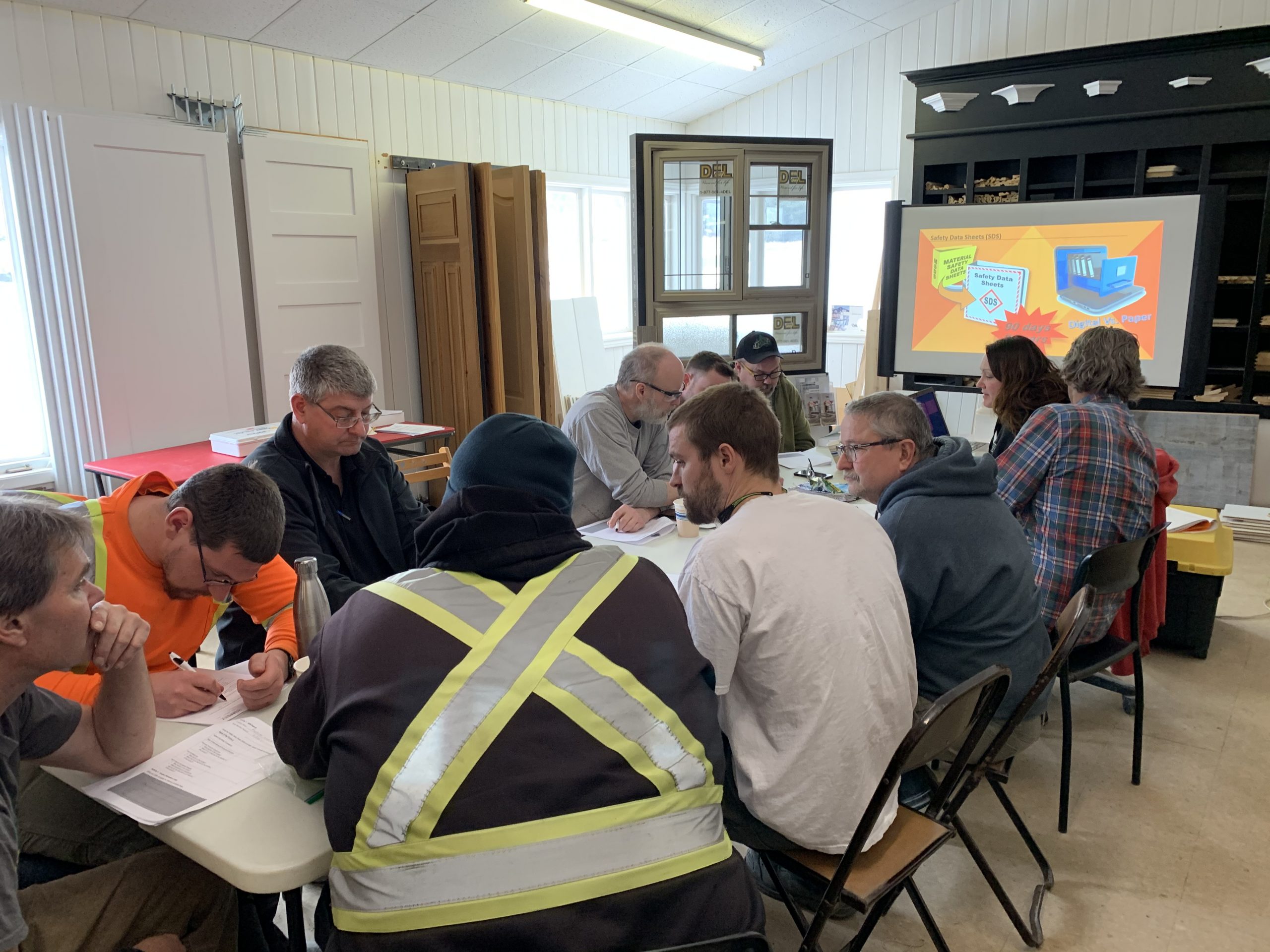
Unlike lecture-only courses, our JHSC training is highly discussion based. Participants share experiences, ask questions, and learn from both the instructor and their peers. Through interactive group work, learners collaborate to solve problems, analyze hazards, and work through workplace scenarios that reflect the challenges they face in their own organizations.

Real World Case Studies From Multiple Industries
Participants benefit from workplace based case studies drawn from a range of sectors. This practical approach connects health and safety concepts to everyday situations, making the training more relevant, more memorable, and immediately applicable once participants return to work.
Experienced JHSC Instructors
Our instructors bring industry knowledge and practical insight to every session, creating a supportive environment where participants are encouraged to contribute and engage. By the end of the program, learners leave with the JHSC certification they need along with a stronger understanding of how to identify hazards, participate effectively on a Joint Health and Safety Committee, and help build a safer workplace.
Learn. Discuss. Participate. Apply. Every participant leaves with skills they can use right away.
Get Your Joint Health & Safety Committee Certificate Today
Get Certified. Stay Compliant. Work Safe.
Our goal is not simply to help organizations meet regulatory requirements. We work with employers to develop knowledgeable and effective JHSC members who can make a meaningful contribution to workplace health and safety. By offering both classroom and distance learning options, we make it easier than ever for organizations of all sizes to access high-quality training, regardless of location or workforce structure.
No matter where your employees are located, we have a training solution that helps your organization stay compliant, strengthen safety awareness, and foster a safer workplace for everyone.